Editorial JournalPrivate Islands

Why Panama Is the Best Place to Buy a Private Island

July 20269 min readNew
Why Panama Is the Best Place to Buy a Private Island

Executive Summary

From full-title ownership and tax advantages to remarkable biodiversity and long-term legacy planning, Panama offers one of the world's most compelling environments for private island ownership.

A Country Built for This

Panama does something almost no other country can: stand on the Pacific in the morning, swim in the Caribbean by afternoon. About 87 kilometers apart. Ninety minutes by road. Two entirely different marine systems, running side by side, on a strip of land you could cross in an afternoon.

That geography made Panama a crossroads long before anyone thought to build a canal through it. Ships have rerouted their entire journeys around this eighty-kilometer strip for over a century, simply because there was no better way to get from one ocean to the other. Most countries never get that kind of leverage. Panama got it, and everything else — the trade, the banking, the density of people and capital passing through — grew up around it.

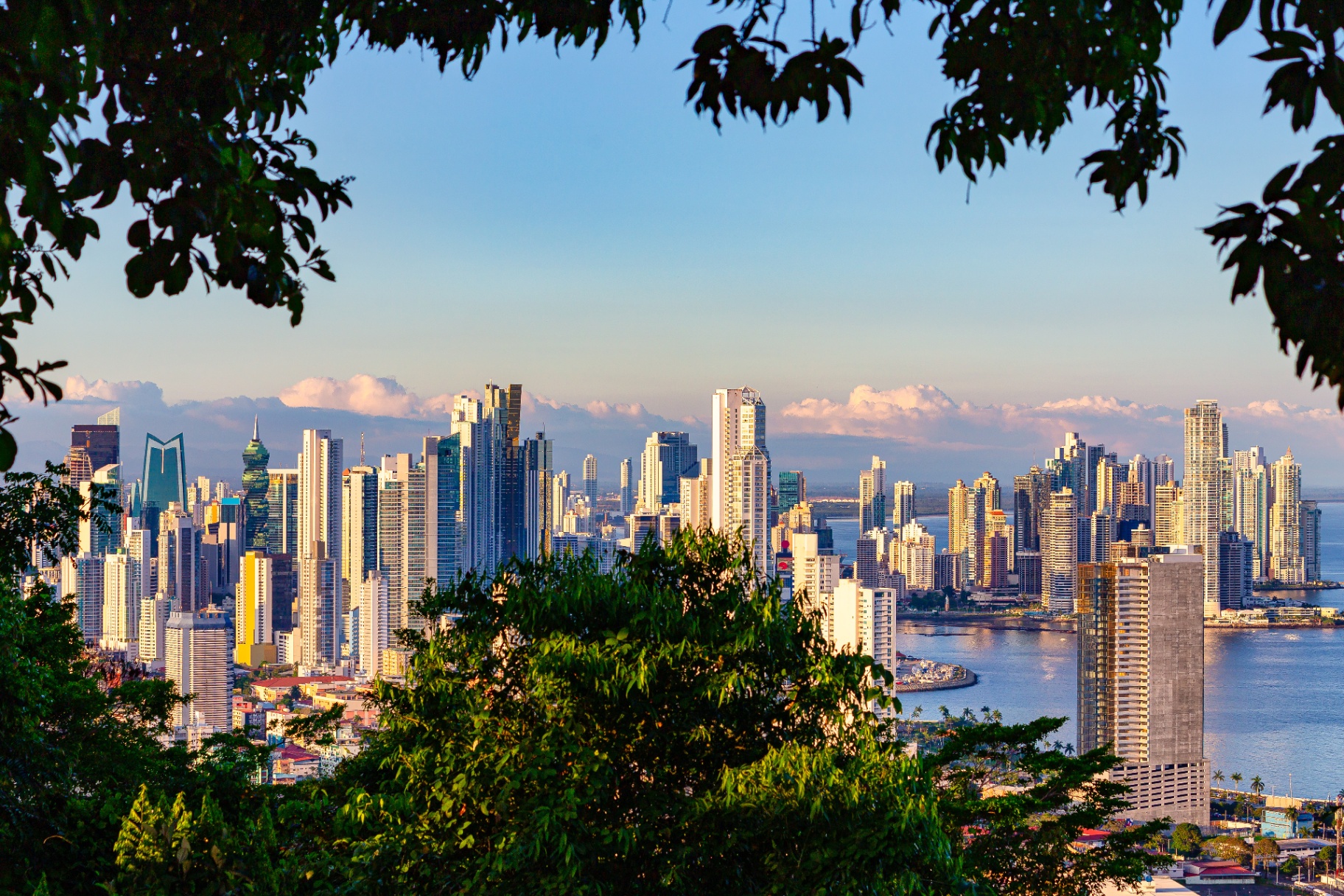
It's still a crossroads today. For trade, for people, and increasingly, for buyers looking for something no other market quite offers: a country stable enough to hold serious wealth and wild enough to still have something worth protecting.
The Practical Case, First

Before we get into the water and the wildlife, there's a plainer reason serious buyers keep landing here.

Panama has used the US dollar as its currency since 1904. For a foreign buyer, that removes an entire category of risk most international real estate carries — no currency conversion, no exchange volatility eating into value, no guessing what your asset is actually worth in dollar terms next year.

It also runs on a territorial tax system: only income earned inside Panama gets taxed. Foreign-sourced income — dividends, capital gains, pensions, rental income from elsewhere — isn't part of the equation. It's the core structure of how the country taxes, and it's been stable for decades.

And it's genuinely easy to get to and move around in. Tocumen International is one of the best-connected hubs in Latin America, with direct flights to most major cities in North and South America and Europe. The Friendly Nations Visa gives citizens of dozens of countries a straightforward path to residency. None of this is a secret. It's just consistently true, year after year, in a region where consistency is the rare commodity.

Foreign buyers hold full title here — the same as a Panamanian citizen would. No separate weaker form of ownership, no leasehold standing between you and the land. You own it outright, and you can sell it, transfer it, or will it exactly the way you would at home.

Then There's the Water

Here's what most buyers don't expect: the ecological story is just as strong as the financial one.

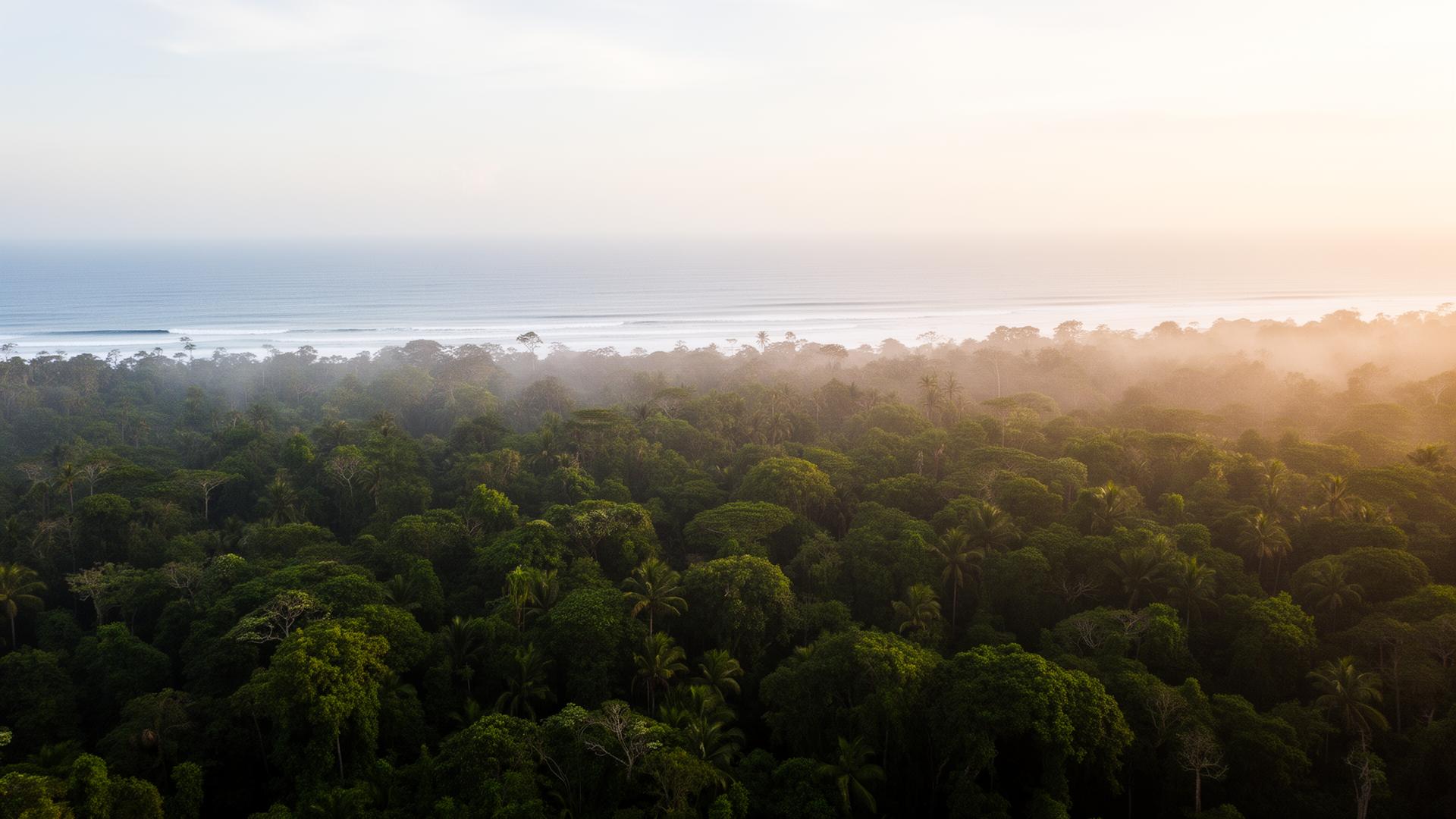
On the Pacific side, Mission Blue named the Pearl Islands Archipelago a Hope Spot in March 2023 — one of a handful of places worldwide that marine scientists consider essential to the ocean's survival. Not a nickname. Scientists looked closely at these waters and decided they mattered enough to protect.

The Caribbean side carries its own recognition. The Talamanca Range–La Amistad Reserves, stretching along the Panama-Costa Rica border toward the Caribbean coast, has been a UNESCO World Heritage Site since 1983 — one of the largest intact stretches of wilderness left in Central America. Two coasts, two oceans, both independently recognized as worth protecting. Most countries can't say that about even one coastline.

These waters also sit inside the Eastern Tropical Pacific Marine Corridor, linking Panama to Cocos Island (Costa Rica), Coiba (Panama), Gorgona (Colombia), the Galápagos (Ecuador), and Malpelo (Colombia). Whales, sharks, turtles, and rays move through it as one connected system. An island here isn't a piece of land near water — it's a node in something alive.

13 endemic subspecies — found here and nowhere else on Earth, per Key Biodiversity Area records for the Pearl Archipelago. Four sea turtle species — hawksbill, green, leatherback, olive ridley — nesting and foraging across these islands. Among the highest whale-sighting rates in the region, July through October, when humpbacks arrive from both hemispheres to breed and calve in the same waters.

This is what survives when nothing interrupts it.

Why Longevity Is Looking Here

Wellness has shifted. The most serious operators — building retreats meant to actually restore people, not just relax them for a weekend — have moved on from infinity pools toward intact ecosystems. Clean water. Undisturbed migration. Air and ocean left alone.

It's not a passing trend. The global wellness economy reached $6.8 trillion in 2024 — double what it was in 2013 — and wellness tourism alone now moves close to $990 billion a year, growing at nearly 10% annually. It's why people fly across the world and pay enormous sums for forest bathing, cold plunges, a controlled dose of something missing from daily life.

Here, nothing had to be recreated. It was always here, running on its own terms — which is really just an invitation to be gentle with it. Not to build over what makes a place like this valuable, but to build alongside it.

Something You Hand Down, Not Just Own

Many of Panama's islands are volcanic in origin — solid rock, not sand accumulated over time. It's not at the mercy of erosion or a bad storm season the way a sandbar or reef island would be. It was here long before anyone thought to buy it, and it'll be here long after.

That permanence matters even more once you think about what happens after you're gone. In much of Europe, passing land to your children comes with a steep bill attached — inheritance tax runs as high as 45% in France, and can climb past 80% in Belgium and Spain depending on the relationship and the amount. Panama has none of that. No inheritance tax, no estate tax, no gift tax. What you build here is what your family actually keeps.

Which is really the heart of it. Not just a purchase — something you can tell your children about, and they can tell theirs. This has been our family's island for generations. Not many sentences carry that kind of weight anymore, and fewer places let you say it without an asterisk.

Compared to the Usual Suspects

Most buyers looking at a private island are also looking at the Bahamas, Fiji, or the Greek islands — and rightly so, each one has something genuinely appealing. It's worth putting Panama alongside them honestly, without taking anything away from any of them.

The Bahamas and Fiji offer that classic tropical beauty and an island lifestyle that's already well established, with all the tourism infrastructure that comes with it. One thing simply worth keeping in mind is that both sit inside hurricane or cyclone belts, which can weigh on insurance costs over time. Panama, close to the equator, sits naturally outside that path. In Fiji, many foreign purchases come as a 99-year leasehold rather than full title — just a structural difference worth weighing against what you're actually looking for.

The Greek islands offer something none of these other destinations can: centuries of history and a natural closeness to Europe that many buyers value deeply. One practical detail worth knowing is that non-EU buyers sometimes need additional authorization in certain zones, which can add some time to closing. And, as in much of Europe, inheritance tax is something worth factoring in over the long run.

In the end, each of these destinations has its own character and its own appeal. Panama simply offers a particular combination — full title, a stable climate, and a straightforward tax system — that can feel especially easy for someone who values simplicity, particularly when thinking long-term.

Where This Leaves You

A fully private island, at a price closer to a condo than most people expect. Full title. Straightforward transferability. Nothing standing between you and ownership.

Two oceans. A living corridor. A currency you already understand, a tax system that doesn't punish you for owning something abroad, and nothing waiting to claim a piece of it when you pass it on. That's a rare combination — rigor and rarity, in the same place, at the same time.

Tina M. Punjabi — Real Estate Adviser & Private Island Specialist, Engel & Völkers Panama (License PN 4886).

Key Takeaways

  • Full-title ownership for foreign buyers, on the same terms as Panamanian nationals.
  • US dollar economy and territorial taxation remove currency and foreign-income risk.
  • Two independently protected coastlines — the Pearl Islands Hope Spot and the Talamanca–La Amistad UNESCO reserves.
  • No inheritance, estate, or gift tax — a genuine framework for multigenerational ownership.

Related Reading

Continue exploring private island ownership in Panama.

Learn how our Private Island Advisory practice guides international buyers through selection, legal and environmental diligence, and long-term stewardship — or begin the conversation directly.